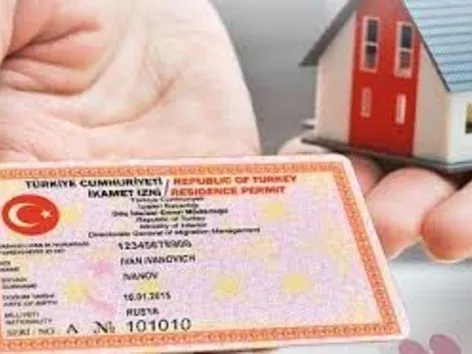








What Documents Are Needed for a Residence Permit in Turkey?
Why You Need a Residence Permit and Who It Is For
A residence permit in Turkey — or, as the locals call it, ikamet — gives a foreigner the right to stay legally in the country for longer than 90 days out of 180 allowed for visa-free entry. With it, you can open a bank account, obtain a tax ID number, get a local SIM card, enroll children in school, use healthcare services, and — most importantly for property owners — live in your own apartment or villa year-round without worrying about the visa run.
In 2025, the rules remain favorable: Turkey continues to issue short-term residence permits based on property ownership, a long-term rental agreement, study, medical treatment, and even a tourist itinerary. However, for the application to be approved, the document package must be flawless. Let's break down what exactly it includes.

Basic Package: What Every Applicant Needs
Regardless of the basis — property purchase, rental, study, or tourism — the Turkish migration authority (Göç İdaresi) will require a universal set of documents. Here is what it consists of:
1. Passport
The passport must be valid for at least 60 days beyond the expiration date of the requested residence permit. This is crucial: if the passport expires earlier, the application won't even be accepted. You will also need a notarized translation of the passport into Turkish. This can be done at any notary office in Turkey (noter), and the procedure takes about 20–30 minutes.
2. Application Form (Online Application)
The initial submission is made exclusively through the e-ikamet.goc.gov.tr portal. The system will prompt you to fill out a form with personal data, residential address, basis for the residence permit, and will assign a date and time for a randevu — a personal visit to the migration office. After completing the form, you need to print it out and bring it with you.
3. Photographs
Four biometric photos sized 50×60 mm on a white background. The requirements are strict: head must be directly facing the camera, no smile, no glasses with tinted lenses.
4. Health Insurance
The policy must cover the entire duration of the requested residence permit. For a short-term ikamet, standard insurance from a Turkish company (Allianz, Aksigorta, Anadolu Sigorta, and others) will suffice. The cost ranges from 500 to 1,500 lira per year, depending on age. For retirees, the policy will be more expensive.
5. Proof of Income
The migration authority wants to make sure you have sufficient means of subsistence. Suitable documents include: a bank statement from a Turkish bank account, a certificate of income from abroad, a pension certificate, or a statement of dividends. The exact amount is not specified by law, but in practice a comfortable benchmark is from $500–600 per person per month.
6. State Fee Payment Receipt
After the randevu is scheduled, the system will generate a payment document. It can be paid at a Vergi Dairesi (tax office) or through certain banks. The cost of the ikamet card in 2025 is approximately 1,500–2,000 Turkish lira (plus the residence permit fee itself, which depends on citizenship). Keep the receipt — it will be required on the day of your visit.

Documents for Property Purchase: List for Owners
If the basis for a residence permit is ownership of real estate, a 'property block' is added to the basic package. This is the most reliable path: a residence permit based on TAPU is issued for up to two years and is much easier to renew than a tourist one.
TAPU (Title Deed)
The certificate of ownership is the main document. You need the original and a notarized copy. The TAPU must be in the applicant's name. If there are multiple owners, only one of them can submit a residence permit application for that property.
Real Estate Appraisal
A market value appraisal report (değerleme raporu) is prepared by an accredited appraiser. This document confirms that the property value meets the minimum threshold for obtaining a residence permit. The threshold varies by region: in small towns, it may start from $50,000, in resort areas and major cities (Antalya, Istanbul) — from $75,000–100,000. Check the current figures with the local migration office.
Address Registration Certificate
After purchasing the property, you need to visit the local population directorate (Nüfus Müdürlüğü) and register your residence address (Adres Kayıt). This certificate is part of the residence permit application package and confirms that you actually reside at the stated address.
Tax ID Number (Vergi Numarası)
The Turkish tax number is obtained at the local tax office. Without it, you cannot open a bank account, get insurance, or even submit a residence permit application. The procedure is free and takes 10–15 minutes. Bring your passport and its notarized translation.

Additional Documents: Family, Rental, and Special Cases
If Applying with Family
When a residence permit is being obtained for a spouse and children, notarized translations of the marriage certificate and birth certificates must be attached. Children under 18 are included in the main applicant's application. Health insurance must be taken out separately for each family member.
If Applying Based on Rental
A tourist residence permit based on a rental agreement (kira sözleşmesi) requires: the agreement itself, notarized, a notarized copy of the landlord's passport, and utility bills for electricity and water transferred to the applicant's name. Additionally, the migration office may request a travel itinerary around the country — a formality, but one that should not be overlooked.
For Students
You will need a certificate of enrollment from a Turkish educational institution, a student ID, and proof of financial means (a sponsor letter or bank statement).
Common Mistakes and How to Avoid Them
- Expired passport. Even if it expires in 70 days and you are requesting a one-year residence permit — it will be denied. Renew your passport in advance.
- Ignoring "closed" neighborhoods. In some districts (mahalle), the share of foreigners has exceeded 20% — applications for an initial residence permit are no longer accepted there. Before buying property, check the district's status at the migration office.
- Incorrect translation. The notarized translation of documents must be done by a sworn translator (yeminli tercüman). Regular translations are not accepted.
- Address mismatch. The address in the TAPU, registration certificate, and application form must match exactly. Any discrepancy is grounds for refusal.
- No insurance at the time of submission. The policy must be valid on the day of the randevu and cover the entire period of the requested residence permit.
What Happens After Submission
On the day of the randevu, you come in person to the migration office with the complete set of documents. The officer checks the originals, scans your fingerprints, and accepts the application. You will be given a confirmation certificate (tebligat) — it temporarily replaces the ikamet until you receive the plastic card. The processing time is 30 to 90 days. The finished card is sent by registered mail via PTT (Turkish post) to the address indicated in the application form.
Conclusion
Putting together the document package for a Turkish residence permit is not a difficult task, but it requires attention to detail. The key components for success are: a properly executed TAPU (or rental agreement), a valid passport with enough remaining validity, a health insurance policy, and accurate notarized translations of all papers. Entrust the preparation of documents to professionals — or go through all the steps yourself, armed with this checklist. The main thing is not to delay: the sooner you submit the application after receiving the TAPU, the sooner you'll become a full-fledged resident of sunny Turkey.