








How to Pay a Deposit?
What is a deposit and why is it needed
A deposit (in Turkish depozito or kapora) is a sum of money that the buyer transfers to the seller at the stage of signing the preliminary purchase agreement (ön sözleşme). It serves two functions: reserves the chosen property for you and confirms the seriousness of your intentions. Without a deposit, the seller or developer in Turkey generally does not remove the property from sale and continues to show it to other potential buyers.
Unlike Russian legislation, where the Civil Code carefully distinguishes between the concepts of “deposit” and “advance payment,” in Turkish practice the terms depozito and kapora are often used synonymously. However, the legal meaning in the contract is determined by specific conditions: what happens to the amount if the deal falls through due to the fault of one of the parties. That is why it is so important that the contract is drawn up in two languages (Turkish and Russian) and carefully proofread — either independently or with the help of a lawyer.

Deposit amount: how much money is needed
The deposit amount when buying real estate in Turkey varies depending on the type of property and the agreement between the parties:
- 5–10% — standard range for most deals on the primary market (new builds, under construction properties);
- 10–25% — occurs on the secondary market, especially when demand for a particular property is high;
- for investment projects at an early stage of construction, developers may offer more flexible conditions — for example, a first payment from 5% with subsequent installments.
In practice, the average deposit is about 10% of the property value. So, when buying an apartment for €200,000, the amount is around €20,000. The exact amount is specified in the preliminary agreement (ön sözleşme), and it is also credited toward the total price at final settlement.
Methods of paying the deposit
Bank transfer — the main and most reliable method
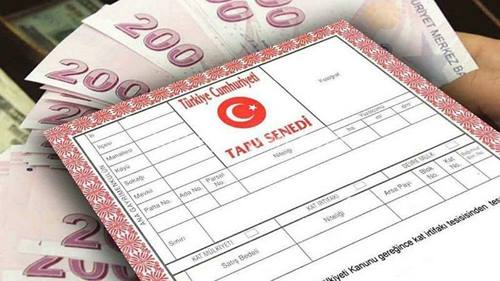
Bank transfer remains the most transparent and legally protected method. For this, a foreign buyer must have an account in a Turkish bank. It can be opened in person by visiting a branch with a foreign passport and a Turkish tax number (Vergi Numarası). The tax number is obtained in 10–15 minutes at any tax office in Turkey — only a foreign passport is needed.
After opening an account, the buyer transfers funds to it from abroad (for example, via SWIFT transfer from a Russian bank or through legal alternative channels) and then sends the deposit to the seller or developer. A mandatory requirement since January 2022: the foreign buyer must exchange currency through a Turkish bank to the Central Bank of Turkey and obtain a Döviz Alım Belgesi (DAB) certificate — a currency exchange certificate. Without this document, the Tapu (title deed) will simply not be issued.
Cash payment
Cash is accepted, but with restrictions. Without declaring it at customs, you can bring in an amount not exceeding the equivalent of 10,000 US dollars per person. If the deposit is less than this amount — the option works. However, for large transactions, the cash method is impractical and less transparent. Moreover, when finalizing the Tapu, the land registry office will still require proof of the origin of the funds.
Cryptocurrency
Some developers and real estate agencies in Turkey accept payment in Bitcoin and other cryptocurrencies. The exchange rate is fixed at the time of transfer, and the price in the contract is stated in euros or dollars. This method is especially relevant for buyers who experience difficulties with direct bank transfers due to sanctions restrictions. However, it is important to make sure that the seller is officially willing to accept this payment method and that it is reflected in the contract.
Step-by-step procedure for paying the deposit
- Choosing a property and agreeing on the price. You decide on the property — an apartment, apartment, or villa — and fix the final price with the seller or developer.
- Obtaining a tax number (Vergi Numarası). It is issued at the tax office (Vergi Dairesi) with your foreign passport. It takes just a few minutes.
- Opening an account in a Turkish bank. With your tax number and passport, you go to the bank and open an account. Most major Turkish banks (Ziraat, İş Bankası, Garanti, DenizBank) serve foreigners.
- Signing the preliminary agreement (ön sözleşme). The agreement is drawn up in Turkish and in the buyer's language. It includes: details of the parties, description of the property, total price, deposit amount, schedule of remaining payments, deadlines for obtaining the Tapu, and conditions for the return of the deposit.
- Transferring the deposit. The amount is transferred from your Turkish account to the seller's account. The transfer is confirmed by a bank receipt (dekont), which is attached to the agreement.
- Obtaining the DAB certificate. If you transferred funds in foreign currency, the bank issues a Döviz Alım Belgesi certificate — a mandatory document for the subsequent registration of the Tapu.
- Final settlement and obtaining the Tapu. The remaining amount is paid immediately before or on the day of registration of the title deed at the Land Registry Office. The deposit amount is credited toward the total price.

Documents and legal protection
From May 1, 2026, Turkey is introducing a mandatory state secure payment system — Güvenli Ödeme Sistemi. The essence of the system: the buyer transfers the money (including the deposit) not directly to the seller, but to a special protected account. The funds are blocked there until the successful completion of the transaction and registration of the Tapu in the buyer's name. Only after that is the money transferred to the seller. This minimizes the risk of fraud and situations where the seller receives the deposit but avoids transferring ownership.
Even if the transaction takes place before the system fully comes into force, make sure the contract clearly states:
- exact deposit amount in hard currency (euros or dollars);
- conditions and deadlines for the return of the deposit if the seller fails to fulfill obligations;
- conditions under which the deposit is not returned to the buyer;
- schedule of remaining payments and the final date for completing the transaction.
Risks and how to avoid them
The main risk when paying a deposit is transferring money without proper documentation. Never hand over the deposit in cash “on trust” or before signing a bilingual agreement. Even when dealing with a well-known developer, make sure that:
- the seller has a valid İnşaat Ruhsatı (construction permit) — if it is a new build;
- the seller is indeed the owner of the property and has a valid Tapu — if it is a resale;
- there are no encumbrances, mortgages, or liens on the property — this is checked through the Land Registry Office.
The best option is to work through a licensed real estate agency that provides legal support for the transaction. The agent will check the cleanliness of the property, prepare the agreement in two languages, and ensure that the deposit is made in accordance with all Turkish legal requirements.
Conclusion
Paying the deposit is the first and perhaps the most important financial step on the way to buying real estate in Turkey. With a competent approach, it reliably secures your right to the chosen property and initiates a legally protected procedure for transferring ownership. Key rules: a bilingual agreement, bank transfer via a Turkish account, obtaining a DAB certificate, and, if possible, using the Güvenli Ödeme Sistemi system. Following these simple principles turns the deposit payment from a worrying moment into a transparent and safe stage of the transaction.


